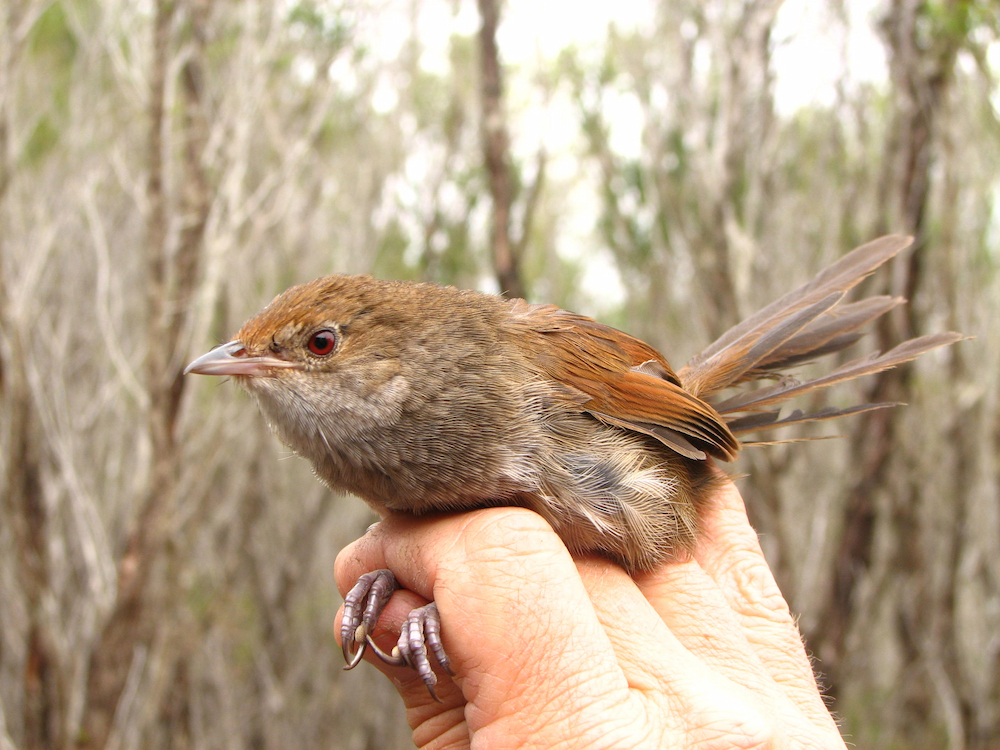
Eastern bristlebird in natural coastal habitat
In early January, a lightning strike ignited a fire on the eastern side of Mallacoota Inlet, burning approximately 2,400 hectares of forest and heath. The fire impacted much of the remaining Victorian habitat of the critically endangered Eastern Bristlebird, making post-fire recovery efforts vital for the species’ survival.
In response, the Southern Ark team has re-established fox control bait stations along fire-affected tracks, including Barracoota Track, Lakeview Track and Howe Flat Track. Bait stations are positioned at one-kilometre intervals and contain fox baits with the toxin 1080, which are carefully buried at a depth of 15 centimetres to ensure targeted and effective pest control.
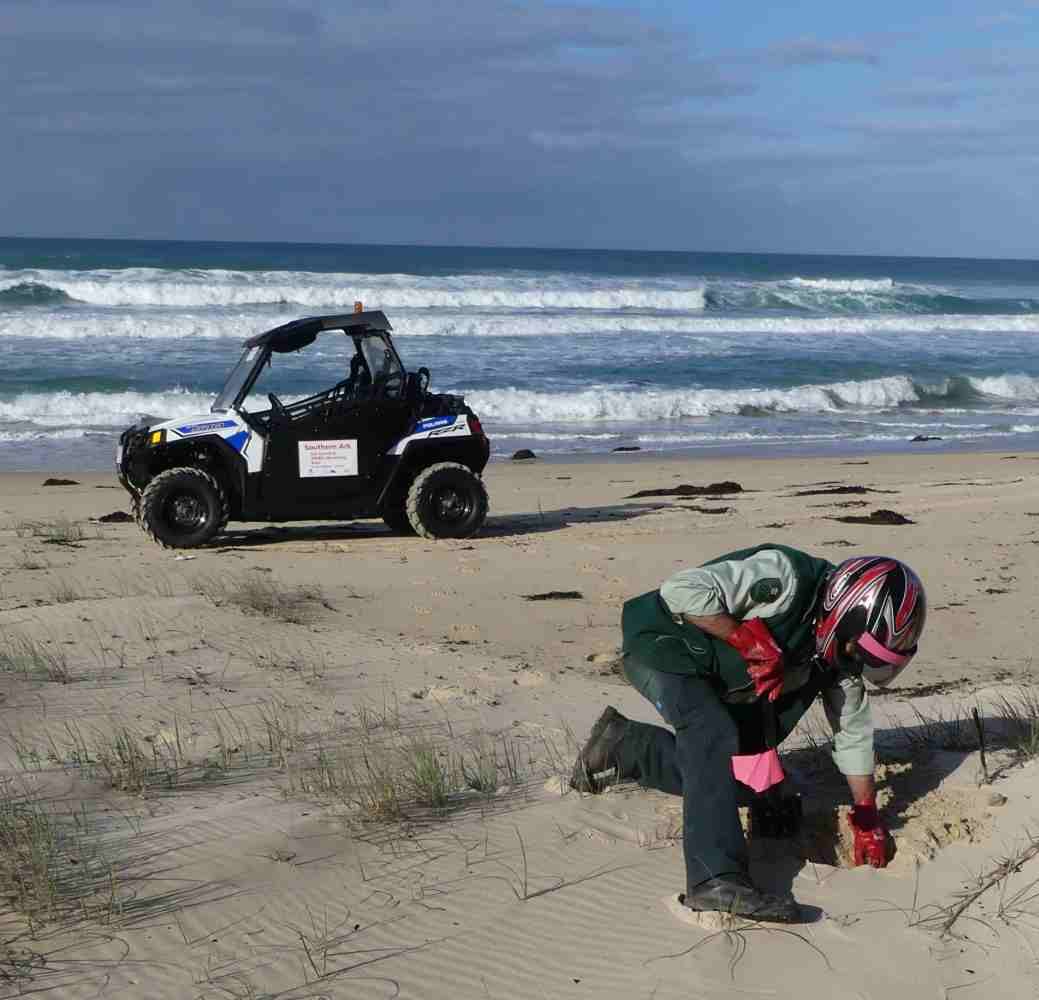
Croajingolong coast during beach baiting
This area is a significant refuge for a range of native wildlife, including Ground Parrots, Southern Brown Bandicoots, Long-nosed Potoroos, Diamond Pythons and Hooded Plovers - all of which are vulnerable to fox predation. Reducing fox numbers is a critical step in supporting the recovery of these native species following fire.
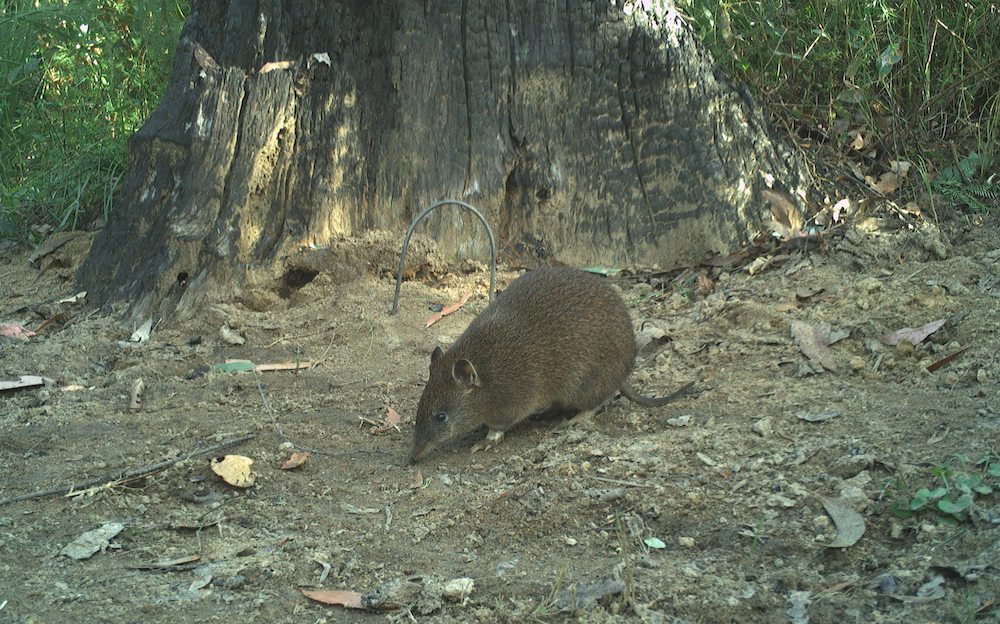
Southern brown bandicoot in natural habitat
In addition to track-based baiting, the Southern Ark team will undertake a beach baiting program along the eastern Croajingolong coast, from Mallacoota Inlet to the NSW border. This work, running from May to the end of July, will help protect the Eastern Bristlebird and other coastal species from foxes that forage along the shoreline.
Residents and visitors are reminded that domestic dogs, even when on leash, are not permitted on beaches east of Mallacoota Inlet, helping to safeguard sensitive wildlife during this important recovery period.
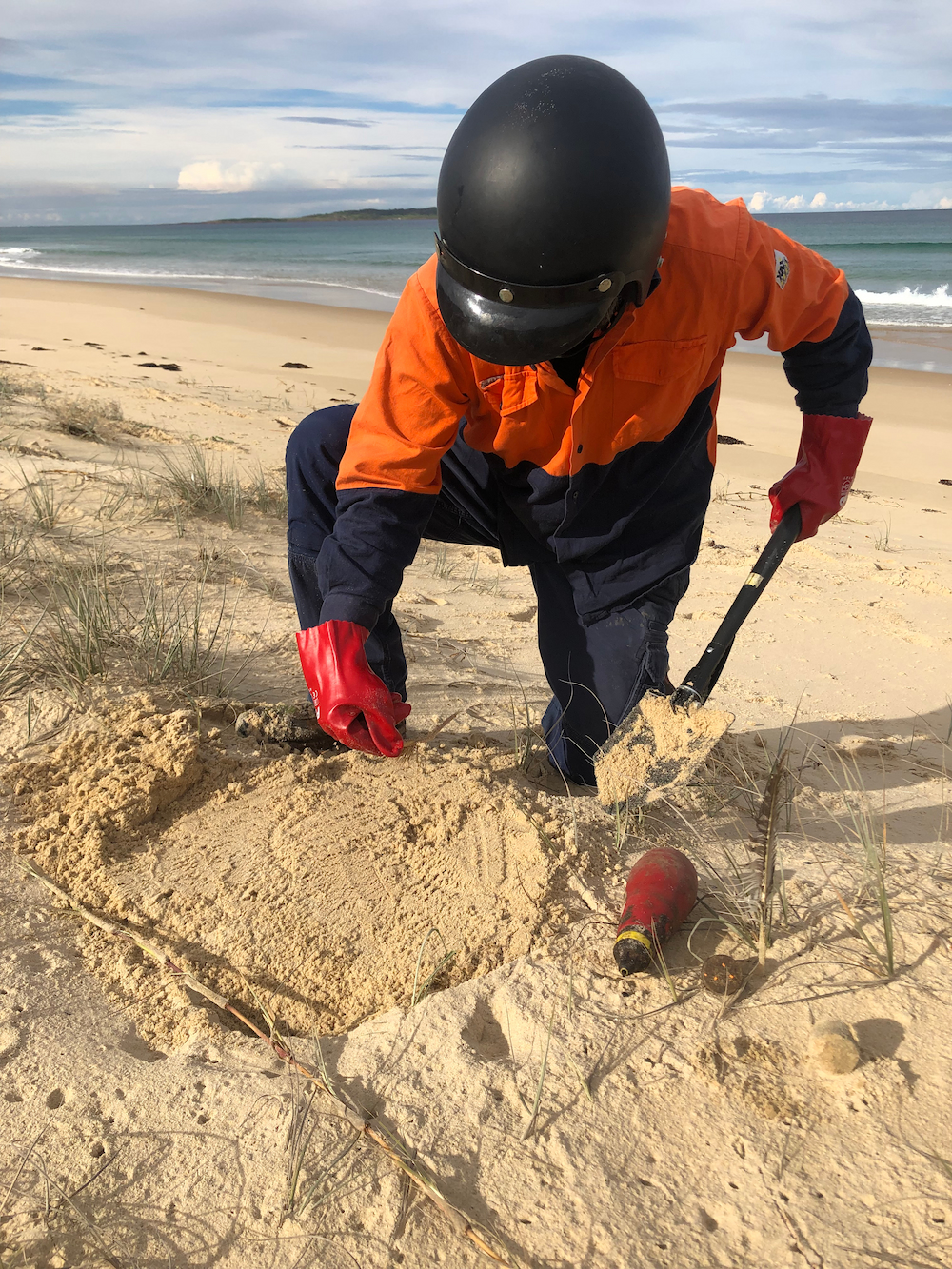
A bait station being installed as part of pest animal management work
Southern Ark is a long running fox control program jointly funded by the Department of Energy, Environment and Climate Action (DEECA) and Parks Victoria. The project works across around one million hectares of public land in Far East Gippsland to suppress fox populations to very low levels and support the recovery of native animals.
Page last updated: 16/07/26